
Beyond Canberra’s Political Bubble
Canberra might be the centre of Australian politics, but it is also a city of tradies, teachers, business owners and families dealing with the same pressures as the rest of the country.
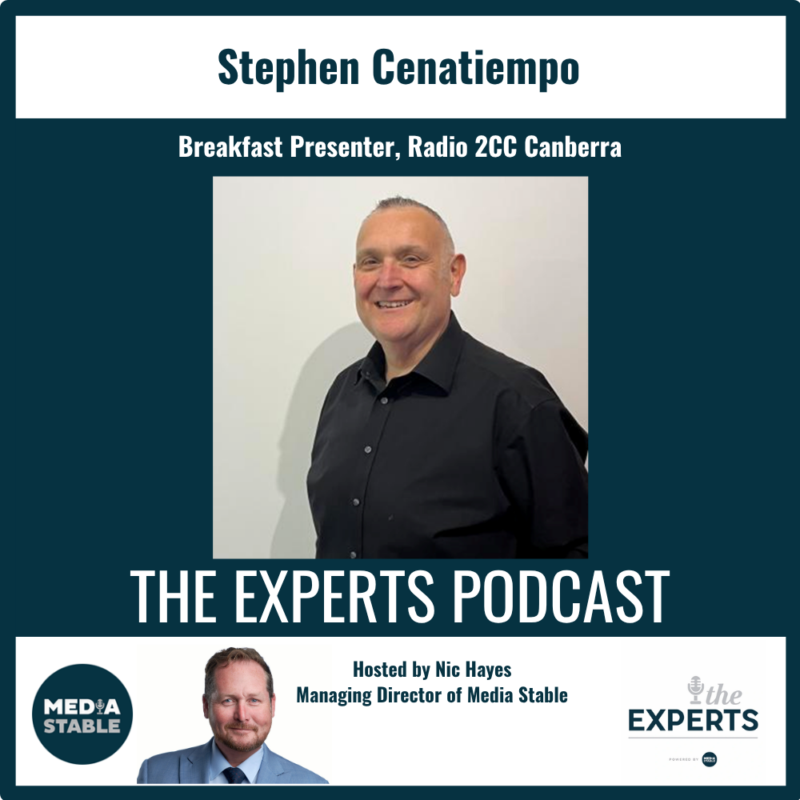
In this episode of The Experts Podcast, Nic Hayes speaks with 2CC breakfast presenter Stephen Cenatiempo about the real Canberra, his unconventional journey into radio and why local broadcasting still matters.
Listen on Soundcloud, Spotify or Apple Podcasts.
A Tale of Two Cities
Stephen describes Canberra as a city divided between the political bubble and the people living outside it.
While politicians, advisers and public servants dominate the national perception of Canberra, many residents in its outer suburbs feel disconnected from the decisions being made around them.
“There are real people in this town. It’s a tale of two cities.”
It is this Canberra that Stephen speaks to every morning.
An Unconventional Road to Radio
Stephen did not follow the traditional broadcasting pathway. Before entering radio, he sold cars, worked in real estate and built a career across several industries.
Those experiences gave him something valuable when he eventually stepped behind the microphone: stories to tell and a genuine understanding of working people.
“I came to radio with stories to tell rather than through the traditional route.”
That life experience shapes his direct, grounded and conversational broadcasting style.
Making National Stories Local
Broadcasting from the nation’s capital means federal politics is never far away, but Stephen knows his audience wants more than political theatre.
His role is to explain how national decisions affect people locally, from household pressures and employment to infrastructure and community concerns.
“National stories matter to local people too. There’s always that local angle.”
For Stephen, strong radio makes big issues relevant to the lives of the people listening.
Conversation Without Agreement
Stephen is comfortable challenging guests, but he also believes disagreement should not prevent a worthwhile conversation.
He recalls interviewing Peter Garrett about AUKUS despite their opposing views. The discussion demonstrated that robust debate can still be respectful, informed and valuable to an audience.
Stephen believes quality radio should be available everywhere, not just in Australia’s largest cities. It should reflect its community, challenge conventional thinking and give local people a genuine voice.
This is a compelling conversation about Canberra beyond the politics, the continuing strength of local radio and a broadcaster who understands the people behind the headlines.