

Lessons from a ‘Meet the Media’ event in Melbourne, and what experts, founders and solo practice owners need to know before pitching. Includes a ‘Pitching the Media’ cheat sheet.
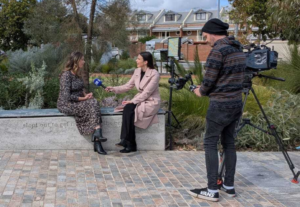
This week I attended a ‘Meet the Media’ event in Melbourne, organised by Nic Hayes, founder of Media Stable (pictured with my good self). Media Stable is an Australian media relations agency and online directory that connects verified corporate and industry experts with journalists and broadcast producers looking for credible commentary.
While the following is based on Australian mainstream media, I’m super-confident the same insights and advice hold true wherever you are. Also, be aware, the event (and what I’m talking about below) is skewed towards professional experts, solo practice owners and founders of expertise-based businesses wanting to build visibility and authority via the media.
Okay, let’s start with the ‘latter’ from the above: what has stayed the same.
I’ve spent over three decades in media, PR and communications, and in my mind, one thing remains unchanged after all that time, and it was reinforced at this week’s event: When pitching the media, make sure you go to them with a genuine (news) story, or a unique and interesting angle the reporter/editor/producer can hook on to.
A good story gives the journalist or producer something new to report: this might be fresh data nobody else has, a unique take on research released by a credible body, a trend you’re seeing before anyone else, an evidence-backed view against conventional wisdom, or a real person whose experience puts a face on a bigger issue (i.e. a case study). Or, you might have an expert comments to make regarding a breaking issue the media is covering.
Secondly, be super-succinct. If you can’t effectively tell your story in a couple of sentences, go back to the drawing board and sharpen it. Distil and feature the core of your story at the outset; any supporting information can be added further down in the body of the (email) pitch.
Importantly, if your pitch is via email, your subject line needs to capture their attention, in a good way i.e. a strong, relevant hook, or angle. Sometimes, all you’re going to get is a fleeting glance from the producer/reporter/editor, so make it count! Ditto if you send a journalist a pitch via Instagram, LinkedIn or Twitter/X direct message.

Plus – and this is important – make sure you understand the particular media outlet you’re pitching to, and that your story idea aligns with their individual requirements.
A newspaper’s weekend magazine, such as Good Weekend, has different needs to the same paper’s news pages, while a drive-time talkback program wanting a sharp three-minute comment operates differently to a daily news podcast exploring one story in depth. There is no one-size-fits-all approach. Tailor your pitch accordingly.
If you’re reaching out to an individual journalist who covers a specific topic or ‘beat’, know what they write about (a reporter’s beat is the subject area, industry, or geographic patch they cover on a regular basis, such as health, education, property, consumer technology, small business and startups, local government etc).
It sounds basic, but you’d be surprised how many media people receive pitches that are ill-directed and irrelevant. Needless to say, it pisses them off. Story relevance is critical, otherwise you’re wasting your time and theirs.
Still on relevance, make sure you develop your pitch with the audience in mind. I’ve heard way too many horror stories of experts and entrepreneurs pitching stories that are all about them and their product or service.
Remember, it’s not about you, it’s about the audience the media outlet serves. If you’re trying to build a reputation as an expert who delivers insights and commentary, then you need to make peace with the fact your role is to add value, and to ensure the story hits the mark for readers, listeners or viewers.
While it’s possible to cut through a journalist’s email clutter ‘out of the blue’ as an unknown quantity, familiarity and a track record will help you immeasurably over the journey.
For best results ongoing, think long term, and build mutually respectful relationships with producers, reporters, editors. Do the right thing by them and their audience, show up, deliver value, and build from there.
The advice above has always rung true for as long as I’ve been in this business, but today, with fewer journalists doing more work, the time pressures have ratcheted up.
This creates both challenges and opportunities for professional experts, founders, leaders and solo practice owners. Stretched newsrooms value experts who respond fast, bring a newsworthy story angle, supply ready-to-use data, and make themselves available at short notice.
And now, the more things change
It’s no secret the media world has seen plenty of upheaval over recent years, and many of the panellists at the event confirmed how much has changed in the way they operate day to day.
Specifically, social media is more influential than ever, and sits front of mind for reporters and producers. They’re often thinking beyond the story in print, on TV or on radio: “How can we extend the life of the story across digital media?”
Many now plan how a story will live on their websites, apps and social channels, so experts who offer short video, images, a strong quote or a shareable chart give them more to work with.
Interestingly, while most mainstream media people prefer to be contacted via email, social media DMs can also be an effective way to reach a show or particular journalist (remember: be succinct!).
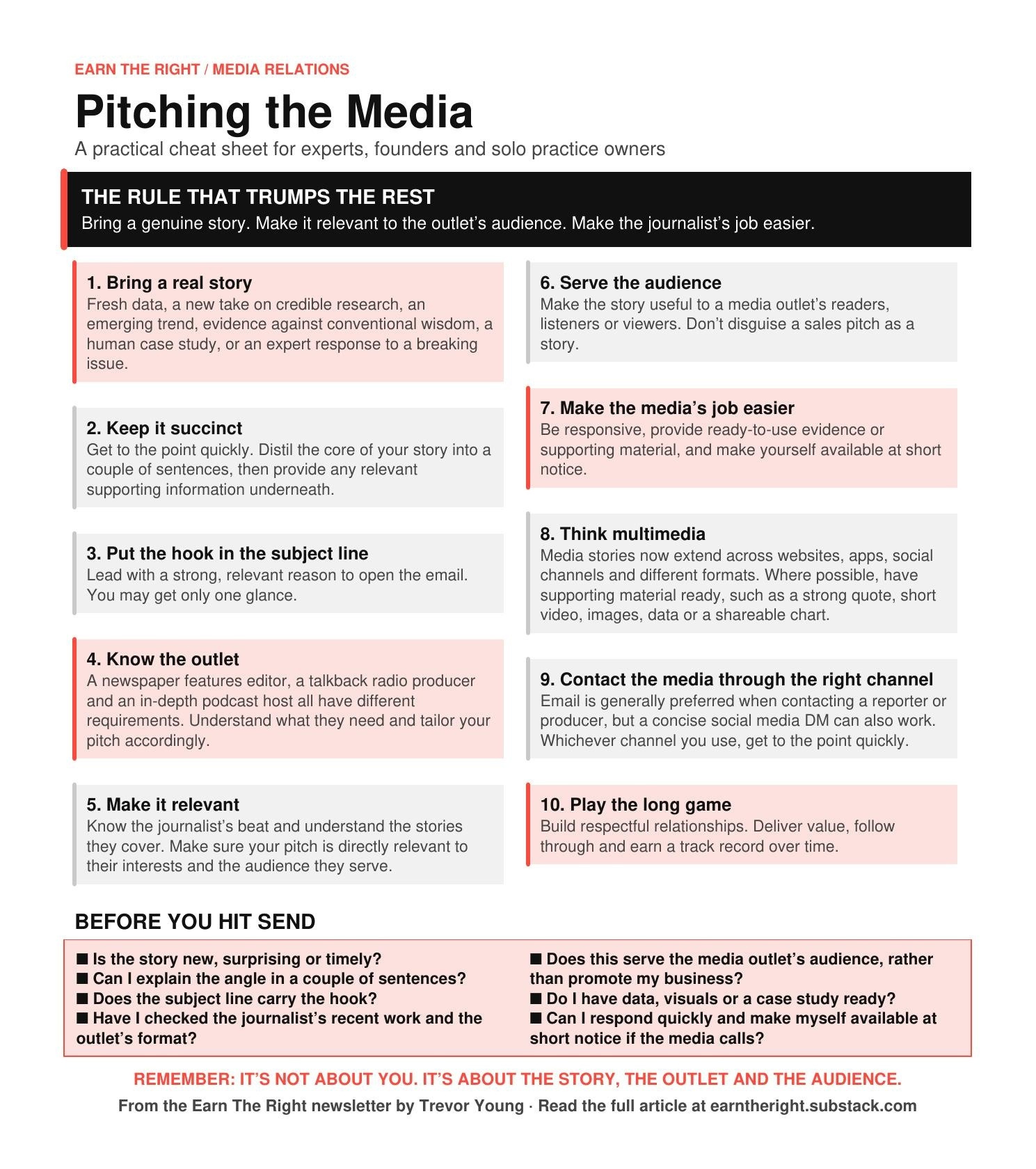
[ DOWNLOAD THE CHEAT SHEET PDF ]
If you’re an expert and are keen to embark on your own earned media program, do your homework, keep things brief and to the point, and always remember you’re serving someone else’s audience. It’s about them, not you.
The following media outlets were represented at the #MeetTheMedia event:
- Herald Sun
- 9News
- 3AW
- Southern Cross Austereo
- 7NEWS
- 7am Podcast
- Good Weekend Magazine
For non-Australian readers, these are all well-established mainstream media outlets, although the 7am Podcast is a newcomer, relatively speaking.
I wrote this piece with the above in mind, but as mentioned earlier, the advice holds for equivalent media outlets in many other countries.
The same principles also apply to specialist industry journals and business-to-business titles, which are often an easier entry point for founders and experts because there is less competition.
Podcasts follow similar rules, with a twist: hosts look for guests who can sustain a 20 to 60 minute conversation, bring fresh stories and insights, and help promote the episode to their own network once the show goes to air.
Onwards!
By Trevor Young